
Why Brass Is Used in Hindu Rituals
Discover the traditional significance of brass in Hindu rituals and why diyas, bells, kalash, thalis and other sacred objects have been crafted from brass for generations.
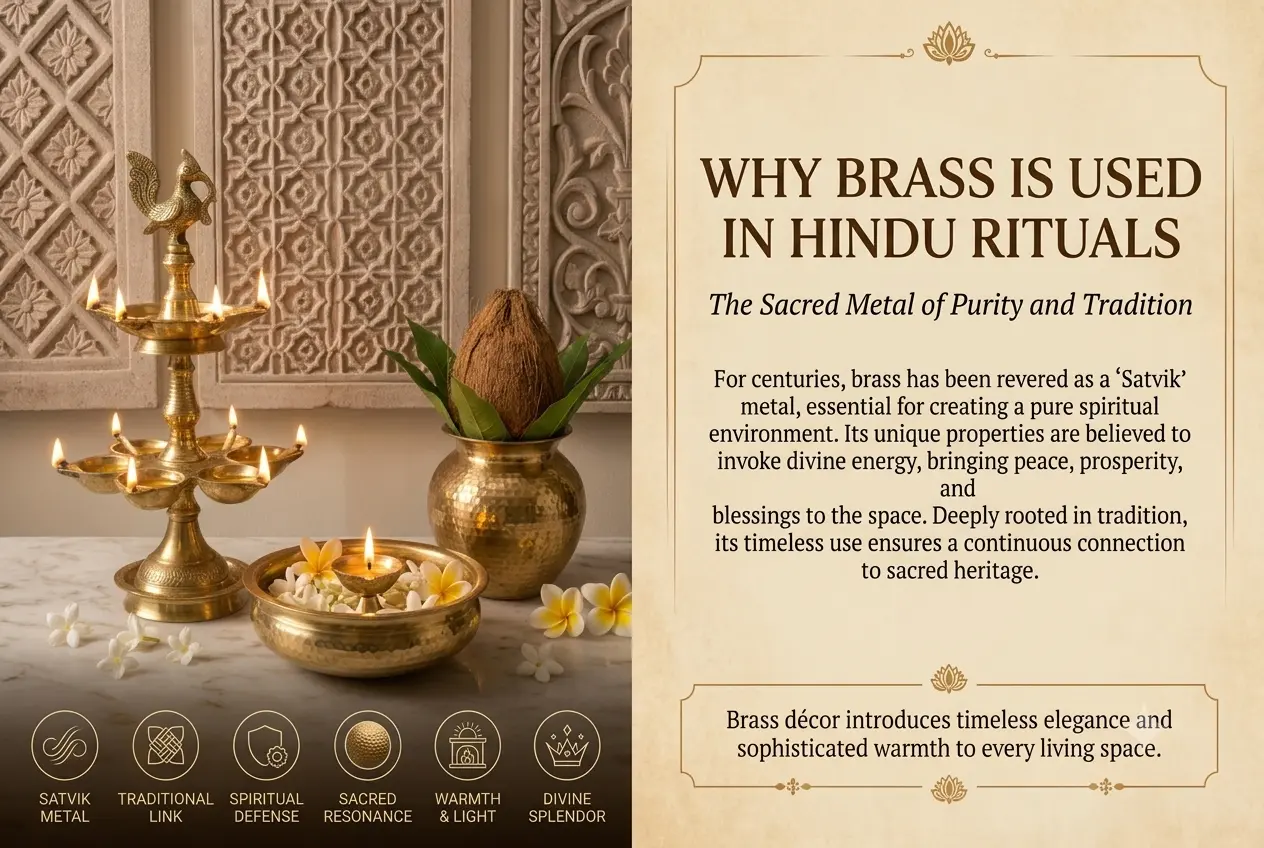
Brass has traditionally been considered a suitable metal for many Hindu worship objects. Its warm golden appearance is associated with auspiciousness and gives sacred spaces a distinctive sense of beauty and reverence.
Brass diyas, bells, kalash, thalis and lamps continue to be widely used during daily worship and special ceremonies.
2. A Connection to Ancient Traditions
The use of metal objects in Indian worship has a long history. Brass became particularly valued for creating durable ritual objects that could be used repeatedly and maintained over generations.
Today, these traditional forms continue to connect modern homes and temples with India's rich craftsmanship heritage.
3. Durable for Daily Rituals
Pooja objects are often handled regularly, cleaned frequently and used during festivals and family ceremonies. Brass is a durable material that can withstand repeated use when properly cared for.
A well-crafted brass diya or pooja thali can remain part of a family's rituals for many years.
4. Easy to Maintain
Brass can be cleaned and maintained with gentle care. Regular dusting, mild cleaning and thorough drying can help preserve its appearance.
For sacred objects that are used frequently, this practical quality makes brass a convenient traditional choice.
5. Used Across Different Rituals
One reason brass remains so popular is its versatility. Different brass objects serve different purposes during worship:
Brass diya — used for lighting during aarti and prayer.
Brass bell — traditionally rung during worship.
Brass kalash — used in various auspicious rituals and ceremonies.
Brass thali — used for arranging offerings and pooja essentials.
Brass incense holder — used for incense and dhoop.
Brass lamps — commonly used during aarti and festive worship.
Together, these objects create a complete and traditional worship setting.
6. A Symbol of Heritage
Brass pooja items are not simply functional objects. They can become part of family traditions, celebrations and memories.
A diya passed from one generation to another or a traditional pooja thali used during festivals can carry a sense of continuity that makes the object meaningful beyond its material value.
Brass in Modern Hindu Homes
Today, brass continues to fit naturally into both traditional temples and contemporary home mandirs. Its timeless appearance works beautifully alongside flowers, wood, stone, textiles and other elements commonly found in Indian worship spaces.
At Pitalam, we celebrate this connection between brass craftsmanship and spiritual tradition. Each piece represents a balance of beauty, purpose and heritage—designed to remain part of meaningful rituals for years to come.
Suggested CTA
Explore Pitalam’s handcrafted brass pooja collection and discover timeless pieces created to bring tradition, devotion and craftsmanship into your sacred space.